


Thank you for Subscribing to Eldercare Review Weekly Brief
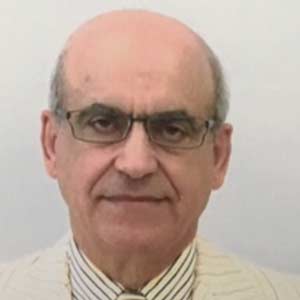 Mourad Rahi, Ph.D. Consultant Chemist. Organo-Analytical Chemistry and Biocompatibility of Medical Devices
 Abstract
This article highlights the shortfalls of the analytical data and guideline ambiguities leading to reporting questionable analytical data toxicological risk assessment (TRA) and possibly putting the safety of a medical device at risk. Analytical Evaluation Threshold (AET) for use in studies designed for long-term implants often leads to AET calculations that are multiple folds below the limit of detection (LOD) of analytical instrumentation. The common practice routinely followed is to perform concentration of solvent extracts to presumably bring the calculated AET value above the LOD.
Concentration of complex solvent extracts for analysis in full scan mode without further purification is not a recommended approach. The practice often leads to reporting hundreds of compounds, even from the simplest devices constructed of pure alloy or single polymeric material, lacking validity and authenticity. Evaluation of analytical data from many extractable studies following concentration of extracts showed that most of the reported compounds are misidentified, unidentified, or do not relate to the construction materials or manufacturing process of the device. The concern for concentration of extracts to bring the calculated AET above the LOD is highlighted in ISO 10993-18. (1) The FDA, for whatever reason, does not recognize some clauses in Part B: Supplementary Information Sheet (SIS). (2) This article provides urgent recommendations for FDA to reconsider the recognition of clause 5.5, which constitutes a fundamental principle of chromatography and spectroscopy, to ensure generation of acceptable analytical data for toxicological risk assessment (TRA) of long-term implants.
Discussion
Chemical characterization of extractables and leachables (E&L), especially of complex medical devices, presents enormous challenges even to the best in the field of analytical chemistry, chromatography and spectroscopy. It is even more challenging at baseline noise level of detection. It is paramount to acknowledge that the spirit of ISO guidelines (1-5) covering the process of chemical characterization of extractables and leachables (E&L) for medical devices is generally satisfactory and provides appropriate recommendations for study conduct. However, study deigns for long term implants, as commonly followed by the industry, often results in analytical data that does not reflect the true extractables of the device. This is mostly due to concentration effect, identification, and quantification at baseline noise level of detectors, and lack of analytical expertise for data acquisition and interpretation. Analysis at baseline noise level (i.e., trace level analysis) is a challenging discipline of the art of science. It should not be assigned to laboratory personnel and the so called “subject matter experts’ whose training is often limited to following standard operating procedures, instrument operation, library search, data transfer, formatting and ensuring proper dates, signatures, and approvals, etc.
These concerns result from review of numerous analytical reports generated from various leading ISO 17025 certified laboratories performing chemical characterization of E&L following ISO guidelines. (1-5) These reports were for a variety of long-term implants ranging in complexity from simple devices constructed of single polymer, metal or metal alloy to complex devices constructed of several polymeric materials requiring concentration to presumably bring the AET above the LOD.
The reports showed not only detection of hundreds of compounds per solvent extract from the simplest and most stable devices but also a lack of identification accuracy, chromatographic and spectroscopic justification. Also, the identification of many compounds did not follow the basic principles of solubility, detection specificity, and stability, or specify source of unexpected or unrelated compounds. This topic is a subject of discussion in E&L circles, publications, conferences, and webinars. (6-10) In addition, a similar pattern of results is often observed regardless of device construction materials indicating similar background for detection due to commonly encountered laboratory contaminations, and concentration effects. (11-13) At baseline noise level, detectors do not discern between true analytes in full scan mode and background noise.
Recommendations
Concentration of solvent extracts to presumably meet the calculated AET requirement is an impractical analytical approach of analysis in full scan mode. The concentration process adds another layer of complexity for identification and quantification of true extractables and throws the data into an invalid basket for TRA.
Concentration presents a real challenge for true and reactive constituents because of potential formation of by-products, increased impurities in extracting solvents, and potential system contaminations.
ISO10993-18 is clear on the relationship between AET, LOD, and concentration effect on identification and quantification when the calculated AET is below the LOD. The ISO committee should step forward and clarify this anomaly with FDA. Otherwise, valuable time will continue to be spent collecting useless data and endless discussion amongst the stake holders to presumably satisfy FDA requirement. The ultimate safety of the device will continue to be performed on inaccurate data that most toxicologists and FDA reviewers rarely question as long as compound identification and quantity are provided.
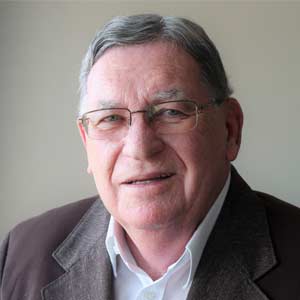 Randy White, Ph.D. Consultant Toxicologist. Toxicology and Biocompatibility of Medical devices
It is the intention of this article to raise the issue to a level of concern and action. We encourage the subject matter experts of the laboratories conducting E&L to not limit their expertise to checking the box for compliance. Rather, it is recommended that they question the study design, including LOD and AET calculation, effect of concentration on data integrity and corroboration of library search with mass spectra, comparison of pre-concentration data to post concentration, etc. We also call on toxicologists to reconsider the TRA approach being followed and recognize that the maximum amount reported per device following extraction may not constitute daily intake/exposure or a source of continuing release of potential leachables. We also urge the FDA to reconsider the clauses of ISO10993-18 that they do not recognize. This issue is supported by expert opinions and published articles. (14,15) A quick action should be taken to address the consequences of Part B: Supplementary Information Sheet (SIS) for clauses 5.5 and E.4 and accept the guidance as recommended by ISO10993-18. The acceptance of these clauses would bring some harmony to study designs across the industry and generate acceptable analytical data for toxicological risk assessment.
Analytical Evaluation Threshold (AET) for use in studies designed for long-term implants often leads to AET calculations that are multiple folds below the limit of detection (LOD) of analytical instrumentation
References
1. Biological evaluation of medical devices: Chemical Characterization of medical device materials within a risk management processISO10993-18:2020(E).
2. https://www.accessdata.fda.gov
/scripts/cdrh/cfdocs/cfStandards/detail.cfm?standard__identification_no=41050
3. ISO/TS 21726:2019(E). Biological evaluation of medical devices-Application of the threshold of toxicological concern (TTC) for assessing biocompatibility of medical devices constituents.
4. M7(R1) Assessment and control of DNA reactive (Mutagenic) Impurities in pharmaceutical to limit potential carcinogenic risk. ICH Guidance for Industry. 2018
5. Use of International Standard ISO 10993-1, "Biological evaluation of medical devices - Part 1: Evaluation and testing within a risk management process"
Guidance for Industry and Food and Drug Administration Staff. Document issued on: September 4, 2020
6. Mourad Rahi. ISO Compliance, Certification, the Arts and Sciences of Chemical Characterization of Extractables and Leachables. BioInterface Conference, 2-4 Nov 2022. Portland, OR.
7. Mourad Rahi and Mark Smith. Biocompatibility Failure & Solvent Effect on Chemical Characterization. Medical Device and Diagnostic Industry (MD&DI). Aug 05, 2021
8. Mourad Rahi and Mark Smith. "Agonies and Thrills of Es and Ls. Part 2: Solvent Effects." SurFACTS in Biomaterials, Spring 2021, Volume 26
9. Mourad Rahi. Data Collection, Corroboration and Data Interpretation. a. BioInterface Webinar. Oct 2020, b. E&L USA Webinar. Oct 2020, c. American Preclinical Services Webinar. June 2020
10. Mourad Rahi. Agonies and Thrills of Es and Ls. BioInterface Conference, Park City, UT. Sept 2019
11. Merck, LC-MS Contaminants. Common mass spectrometry contaminants and their sources. https://www.merckmillipore.com/INTERSHOP/web/WFS/
Merck-HK-Site/en_US/-/USD/ShowDocument-Pronet?id=201604.111
12. Keller, Keller, B.O.; Sui, J.; Young, A.B.; Whittal, R.M. Interferences and contaminants encountered in modern mass spectrometry. Analytica Chimica Acta (Review/tutorial, Special Issue on Mass Spectrometry), 2008
13. T. Stricker, R. Bonner, F. Lisacek, G. Hopfgartner. Adduct annotation in liquid chromatography/high-resolution mass spectrometry to enhance compound identification. Anal. Bioanal. Chem. (2020), 10.1007/s00216-020-03019-3
14. Todd A Kennedy and Mark J. Spinti. How sensitive does chemical characterization of medical devices need to be? Calibration of analytical evaluation thresholds with the carcinogenic potency database. Regulatory Toxicology and Pharmacology, volume 122, June 2021,104899
15. Lutz M u¨ller, et al., Regulatory Toxicology and Pharmacology 44 (2006), 198-211
Company :
Preclintox Services, LLC
Management Mourad Rahi, Ph.D. Consultant Chemist. Organo-Analytical Chemistry and Biocompatibility of Medical Devices
Randy White, Ph.D. Consultant Toxicologist. Toxicology and Biocompatibility of Medical devices
Description
This article highlights the shortfalls of the analytical data and guideline ambiguities leading to reporting questionable analytical data toxicological risk assessment (TRA) and possibly putting the safety of a medical device at risk. Analytical Evaluation Threshold (AET) for use in studies designed for long-term implants often leads to AET calculations that are multiple folds below the limit of detection (LOD) of analytical instrumentation. The common practice routinely followed is to perform concentration of solvent extracts to presumably bring the calculated AET value above the LOD.

